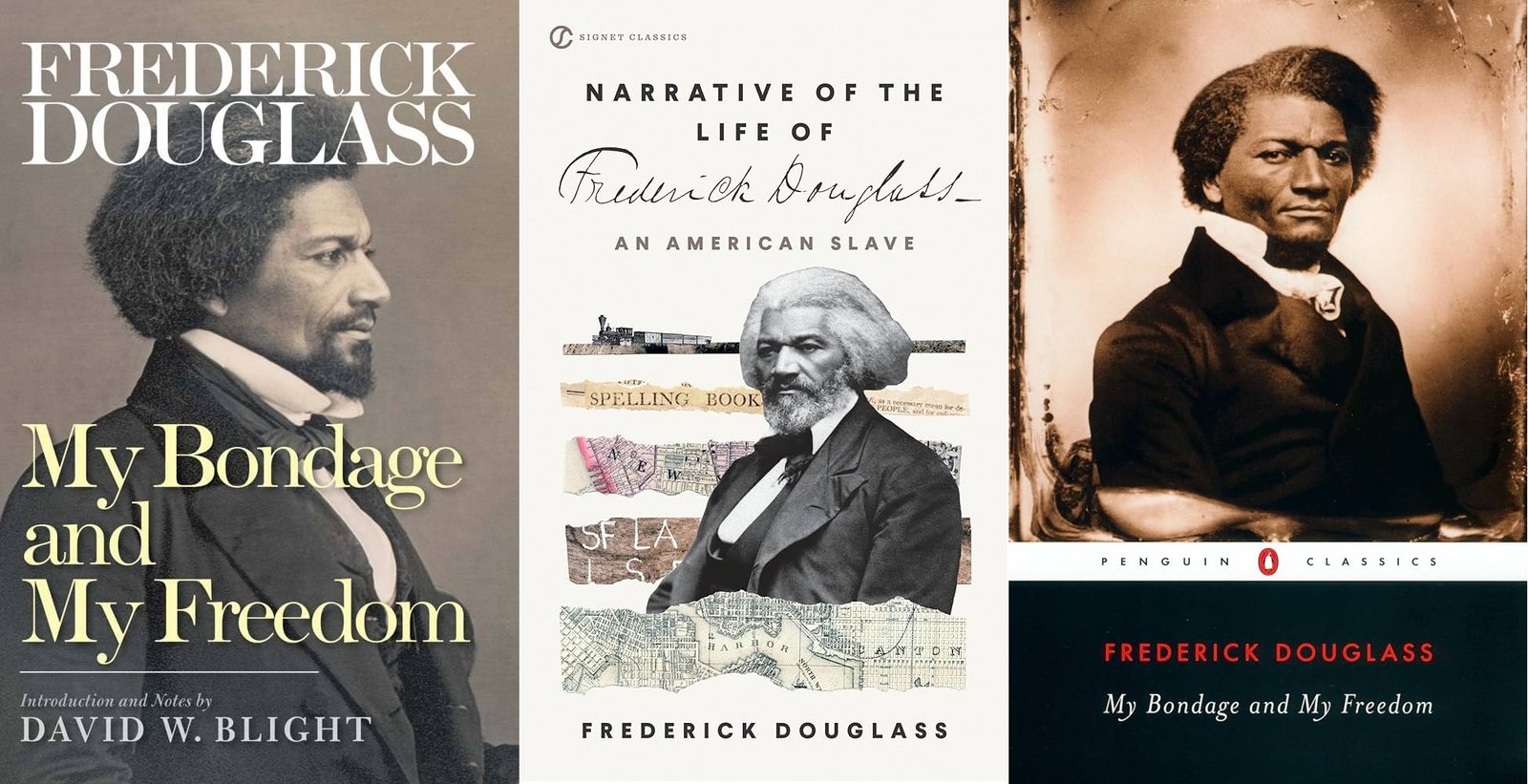
The books written by Frederick Douglass are powerful works of literature
that document the struggle against slavery and the pursuit of freedom,
equality, and human dignity. Through his writing, Douglass shared his
personal journey from enslavement to leadership, using his voice to expose
injustice and inspire social change.
Major Works
Narrative of the Life of Frederick Douglass, an American Slave
(1845) is his most well-known book. It provides a firsthand account of the
cruelty of slavery and the strength it took to escape bondage. The book
played a crucial role in the abolitionist movement by revealing the harsh
realities of enslaved life.
My Bondage and My Freedom (1855) expands on his earlier
autobiography. In this book, Douglass offers deeper reflections on his
identity, personal growth, and intellectual development. It shows his
evolution as a thinker, writer, and activist.
Life and Times of Frederick Douglass (1881) focuses on his
later life and achievements. This work highlights his role as a reformer,
public speaker, and advocate for civil rights, education, and women’s
equality.
Key Themes
- The importance of education as a path to freedom
- The cruelty and injustice of slavery
- Resistance, resilience, and self-determination
- Equality, human rights, and social justice
Legacy of His Writing
Frederick Douglass’s books are more than historical documents; they are
timeless lessons in courage and truth. His writing continues to be studied
in schools and universities and remains relevant in discussions about
freedom, equality, and civil rights today.
Through his words, Frederick Douglass proved that literacy and knowledge
have the power to challenge oppression and transform lives.